
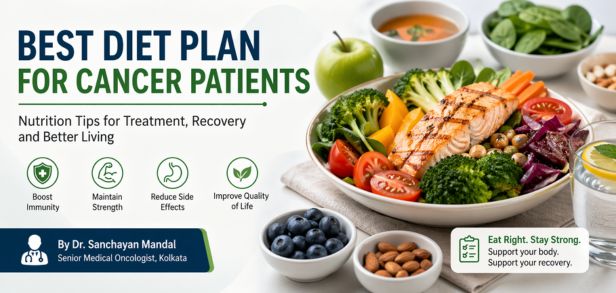
Learn the best diet for cancer patients, including foods to eat during treatment, nutrition tips for chemotherapy, and a simple recovery meal plan.
A cancer diagnosis brings many physical and emotional challenges. Among them, nutrition often becomes a key part of care. The right diet can support the body during treatment, help manage side effects, and improve overall strength.
Whether someone is undergoing chemotherapy, radiation, or targeted therapy, a balanced and personalized diet can make a real difference in how they feel and recover.
Cancer and its treatments can affect appetite, digestion, and energy levels. Many patients struggle with eating enough or maintaining weight.
Good nutrition helps to:
Even small dietary adjustments can have a meaningful impact.
A simple, balanced diet works best. Focus on foods that are easy to digest and nutrient-rich.
Protein is essential for repairing tissues and maintaining muscle.
These provide steady energy and help digestion.
They supply vitamins, minerals, and antioxidants.
Needed for energy and overall cell function.
Staying hydrated is often overlooked but very important.
Having a routine can make eating easier during treatment.
Morning
Warm water with lemon and a few soaked almonds
Breakfast
Oats porridge or vegetable upma with a fruit
Mid-Morning
Coconut water or fresh juice
Lunch
Roti or brown rice with dal, vegetables, and curd
Evening Snack
Light soup or boiled sprouts
Dinner
Simple meal with roti, vegetables, and protein (paneer, chicken, or fish)
Before Bed
Warm milk or herbal tea
This is a general guide and can be adjusted based on individual needs.
Chemotherapy often causes nausea, fatigue, and taste changes. Eating can feel difficult, but small strategies help.
There is no single “perfect diet” during chemotherapy. Flexibility is important.
Some foods may worsen side effects or offer little nutritional value:
Each cancer patient has different needs. Diet depends on the type of cancer, treatment plan, side effects, and overall health.
What works for one person may not work for another. That’s why guidance from a qualified oncologist or nutrition expert is important. A personalized plan ensures the diet supports treatment rather than complicating it.
Nutrition plays a crucial role in cancer care. A balanced diet can support treatment, improve strength, and help patients recover more comfortably.
Focusing on simple, nourishing foods, staying hydrated, and adapting meals based on symptoms can make a significant difference. With the right approach, diet becomes a powerful part of the healing process.
For personalized advice and treatment support, consulting an experienced medical oncologist in Kolkata can help you make informed and safe dietary choices during your cancer journey.
Follow us on:
https://www.youtube.com/@drsanchayanoncologykolkata
https://www.instagram.com/p/DM4k2uqzcea/
https://www.facebook.com/drsancchayanmandal/